

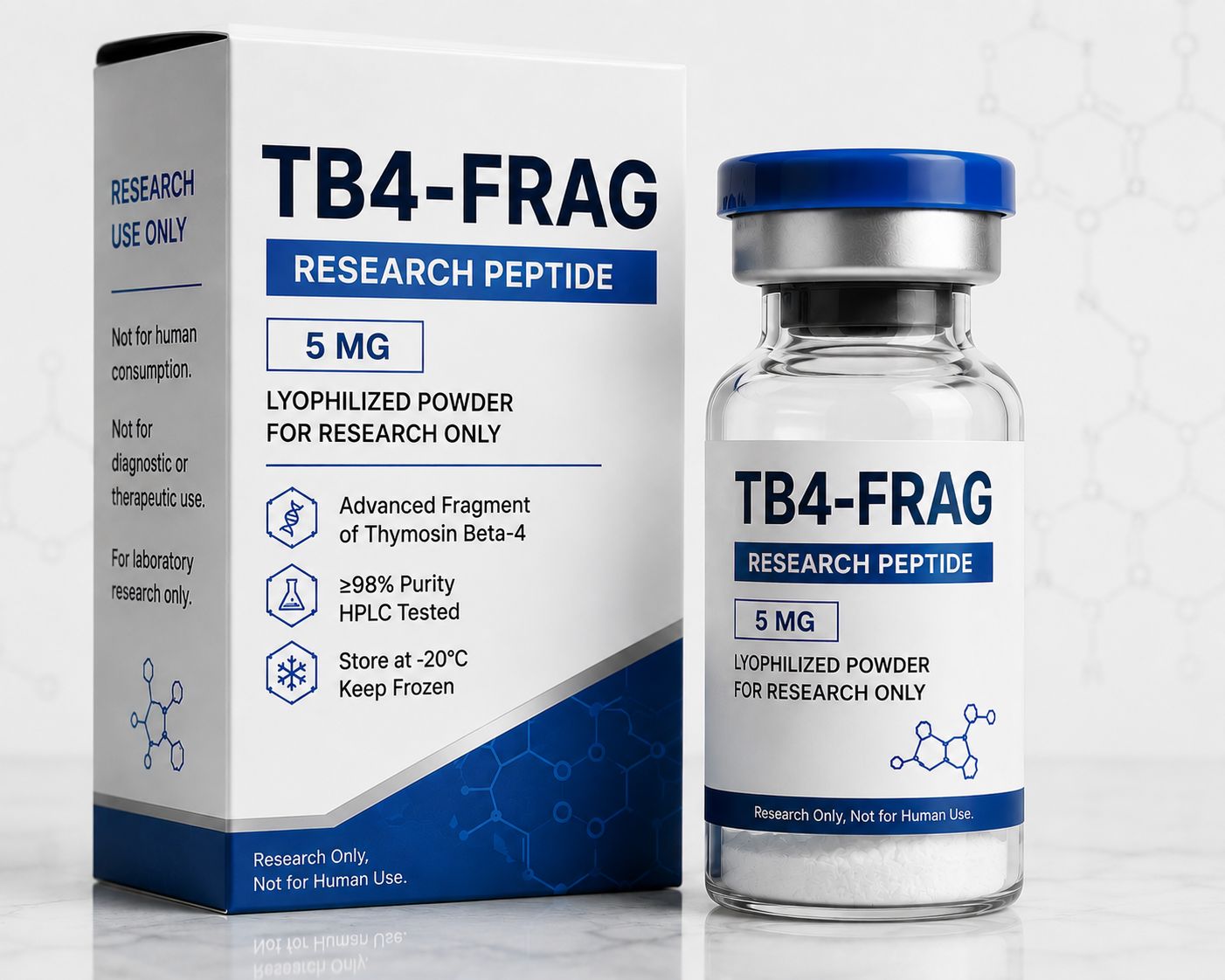
Quick Facts
TB4-FRAG is a highly concentrated, synthetic peptide fragment isolated from the master regenerativeprotein Thymosin Beta-4. Engineered to harness the most potent anti-fibrotic, pro-angiogenic, and anti-inflammatory properties of its parent molecule, TB4-FRAG acts as a targeted biological wedge againstscar tissue formation. It is widely revered for preventing internal organ fibrosis, massively acceleratingwound closure, protecting neurological architecture, and aggressively stimulating dormant hair follicles.
What Is Retatrutide?
Retatrutide (LY3437943) is an investigational peptide that belongs to a class of compounds known as triple receptor agonists. It is designed to activate three key metabolic hormone receptors simultaneously: GLP-1 (glucagon-like peptide-1), GIP (glucose-dependent insulinotropic polypeptide), and glucagon receptors.Retatrutide is being studied in metabolic and obesity-related research because of its unique multi-receptor mechanism of action. Unlike traditional single-pathway compounds, Retatrutide targets multiple metabolic signaling pathways that researchers believe may influence appetite regulation, energy expenditure, glucose metabolism, and body weight.Developed by Eli Lilly and Company, Retatrutide has become one of the most widely discussed investigational peptides in metabolic research and is currently being evaluated in ongoing clinical studies. Retatrutide is a novel triple agonist peptide targeting the GLP-1, GIP, and glucagon receptors simultaneously.
Retatrutide (LY3437943) is a novel investigational peptide developed by Eli Lilly and Company. It is classified as a triple agonist, meaning it simultaneously activates three distinct hormone receptors: GLP-1 (glucagon-like peptide-1), GIP (glucose-dependent insulinotropic polypeptide), and glucagon receptors. This triple-receptor engagement sets Retatrutide apart from every other metabolic research peptide currently in development or on the market.
As of 2023, Retatrutide has demonstrated unprecedented weight loss outcomes in Phase 2 clinical trials, with participants achieving a mean body weight reduction of up to 24.2% over 48 weeks — making it the most effective weight loss compound ever tested in a randomized controlled trial at the time of publication.
How Does Retatrutide Work?
Retatrutide works by binding to and activating three key metabolic hormone receptors in the body. Each receptor plays a distinct role in energy metabolism, appetite regulation, and glucose homeostasis. By engaging all three simultaneously, Retatrutide creates a synergistic effect that exceeds what any single or dual agonist can achieve.
Why Was Retatrutide Developed?
Retatrutide was developed to address the limitations of first and second generation metabolic peptides. While semaglutide (GLP-1 only) and tirzepatide (GLP-1 + GIP) demonstrated significant efficacy, researchers hypothesized that adding glucagon receptor activity could further enhance energy expenditure through thermogenesis and hepatic fat reduction.
What Receptors Does It Target?
- GLP-1 Receptor — Controls insulin secretion, slows gastric emptying, and signals satiety to the brain
- GIP Receptor — Enhances insulin sensitivity, augments GLP-1 effects, and modulates lipid metabolism
- Glucagon Receptor — Increases energy expenditure via thermogenesis and reduces hepatic fat accumulation
How Is Retatrutide Different From Other Peptides?
- Only peptide in development targeting GLP-1, GIP AND glucagon simultaneously
- Highest weight loss outcomes ever recorded in a randomized controlled trial (24.2%)
- Significant reduction in liver fat — addressing NAFLD and metabolic liver disease
- Improvements in cardiometabolic markers including blood pressure and lipid profiles
- Once-weekly subcutaneous injection with a favorable tolerability profile
GLP-1 Receptor
Stimulates glucose-dependent insulin secretion, suppresses glucagon release, slows gastric emptying, and activates satiety pathways in the hypothalamus to reduce food intake.
GIP Receptor
Enhances glucose-stimulated insulin secretion, improves insulin sensitivity in peripheral tissues, augments GLP-1 activity, and modulates lipid metabolism and adipose tissue function.
Glucagon Receptor
Increases hepatic glucose production, stimulates thermogenesis and energy expenditure, promotes lipolysis, and directly reduces liver fat — a key differentiator from GLP-1/GIP dual agonists.
The simultaneous activation of all three receptors creates a synergistic metabolic effect that exceeds single-receptor targeting alone.
TB4-FRAG Research Studies
Published clinical and preclinical research on TB4-FRAG .
TB4-FRAG Master Anti-Fibrotic via TGF-β
Clinical and preclinical studies definitively prove that the active fragment of Thymosin Beta-4 acts as a profound inhibitor of Transforming Growth Factor-beta (TGF-β). By blocking this cytokine, TB4-FRAG stops fibroblasts from creating excessive, rigid collagen, thereby eradicating the primary driver of internal and external scar tissue.
TB4-FRAG Hematopoietic Stem Cell Protection
In breakthrough oncology models, the Ac-SDKP fragment uniquely halts the proliferation of bone marrow stem cells, putting them into a temporary state of "sleep." This mechanism successfully shields the immune system's master stem cells from the devastating toxic destruction caused by chemotherapy and high-dose radiation.
TB4-FRAG Hair Follicle Stem Cell Activation
Dermatological studies highlight TB4-FRAG's remarkable ability to bind to stem cells in the hair follicle bulge. By aggressively promoting cellular migration and massive localized blood flow, it forces follicles into the active anagen growth phase, making it a premier intervention for hair restoration.
Retatrutide vs Other Peptides
How does Retatrutide compare to other leading research peptides?
| Feature | Semaglutide | Tirzepatide | Liraglutide |
|---|---|---|---|
| Weekly Injection | Yes | Yes | Daily |
| Appetite Control | Excellent | Excellent | Moderate |
| Average Weight Loss | 15-17% | 20%+ | 6-8% |
| Dosing Frequency | Weekly | Weekly | Daily |
| Blood Sugar Support | Yes | Yes | Yes |
| Long-Term Data | Extensive | Growing | Established |
| Convenience | High | High | Moderate |
Tirzepatide vs Semaglutide
- Tirzepatide may produce greater weight loss due to its dual-agonist mechanism (GIP + GLP-1).
- Semaglutide currently has longer-term weight management data available.
- Both medications require physician supervision and dose titration.
Tirzepatide vs Liraglutide
- Tirzepatide requires only weekly injections, whereas Liraglutide requires daily administration.
- Tirzepatide produces vastly superior weight reduction (20%+ compared to Liraglutide's 6-8%).
Testing & Monitoring
Every product undergoes rigorous multi-layer laboratory validation.
Medical History
MH- Review of any upcoming surgeries, recent severe musculoskeletal trauma, or history of keloid/ hypertrophic scarring.
- Assessment of cardiovascular history, particularly if recovering from a recent ischemic event.
- Review of hair loss progression if utilizing the peptide for dermatological/follicle restoration.
Laboratory Testing
LT- Systemic Inflammatory markers (hs-CRP, ESR) to track the resolution of underlying chronic inflammation.
- Comprehensive Metabolic Panel (CMP) and Complete Blood Count (CBC) to establish systemic health baselines.
Monitoring During Treatment
MDT- For surgical/wound recovery: Visual tracking of the incision site, ensuring the wound margins are closing seamlessly without excessive raised scarring.
- For hair restoration: Photographic monitoring of the scalp over a 3 to 6-month period to objectively verify follicle density improvements.
- Adjusting the dosing frequency as the acute phase of an injury subsides into the long-term remodeling phase.
Frequently Asked Questions
Everything you need to know about peptide testing, certification, and compliance.
?
Thymosin Beta-4 is a large parent protein. TB-500 is a large synthetic fraction of that protein used for
general muscle healing and actin regulation. TB4-FRAG (typically representing the Ac-SDKP sequence)
is a highly isolated, ultra-short fragment that specifically zeroes in on anti-fibrosis (preventing scar
tissue), protecting the heart, and growing hair. It is a more targeted, stable version of the parent
molecule's most prized healing traits.
While it is most effective at preventing the formation of new scar tissue during the healing process, TB4-
FRAG (especially when combined with extracellular matrix remodelers like GHK-Cu) can aid in the slow, long-term breakdown and remodeling of older fibrotic tissue by modulating localized immune
responses.
Yes. TB4-FRAG is highly regarded in the hair restoration community. It aggressively stimulates the stem
cells at the base of the hair follicle and increases localized blood flow, forcing resting hairs back into the
growth phase. It is often used both as a subcutaneous injection and as a topical serum on the scalp.
Yes. If you are using the injectable lyophilized form, once the powder is reconstituted with bacteriostatic
water, the vial must be kept in the refrigerator (2°C - 8°C) to maintain absolute stability and prevent the
rapid degradation of the short peptide sequence.
Absolutely. Combining BPC-157 (to direct initial blood flow and collagen synthesis) with TB4-FRAG (to
ensure that collagen does not turn into rigid scar tissue) is considered one of the most intelligent,
comprehensive, and highly effective tissue repair stacks available in regenerative medicine.
Certified Vendor Requirements
To qualify as a PeptideValidation.com Certified Vendor, companies must meet our rigorous multi-step testing and documentation standards. Certification is not bought — it is earned through independent verification.
🏆 Apply for CertificationTo qualify, vendors must:
-
Submit Batch Testing
Vendors must submit product samples for independent third-party lab testing before listing.
-
Pass Purity Requirements
All products must meet minimum purity thresholds verified by HPLC analysis.
-
Verify Identity via LC-MS
Molecular identity of each compound confirmed through liquid chromatography-mass spectrometry.
-
Maintain Full Documentation
COAs, batch records, and testing documentation must be publicly available on the vendor profile.
-
Undergo Quarterly Re-Testing
Certification requires mandatory re-testing every quarter to maintain active certified status.
Looking for Certified Peptide Sources?
Access our directory of independently reviewed and tested vendors who meet our rigorous testing and validation standards.
PeptideValidation.com is an independent testing and certification platform. We do not sell peptides or receive commission from vendors.
Access Certified Vendor DirectoryRelated Peptides
Tirzepatide
GLP-1 + GIP dual receptor agonist. FDA approved for type 2 diabetes and obesity management.
Learn More → 🧬GLP-1 AgonistSemaglutide
Gold standard GLP-1 receptor agonist. Marketed as Ozempic and Wegovy globally.
Learn More → ⚡Amylin AnalogueCagrilintide
Long-acting amylin analogue in Phase 3 trials as a combination therapy with semaglutide.
Learn More → 🔥Dual AgonistSurvodutide
GLP-1 + Glucagon dual agonist by Boehringer Ingelheim currently in Phase 3 clinical trials.
Learn More → 🏋️Dual AgonistMazdutide
GLP-1 + Glucagon dual agonist showing strong metabolic and weight loss outcomes in trials.
Learn More → 🩺Healing PeptideBPC-157
Body Protection Compound. Researched for tissue repair, gut healing, and accelerated recovery.
Learn More → 💪Recovery PeptideTB-500
Thymosin Beta-4 fragment. Researched for muscle recovery, flexibility, and anti-inflammatory effects.
Learn More →