

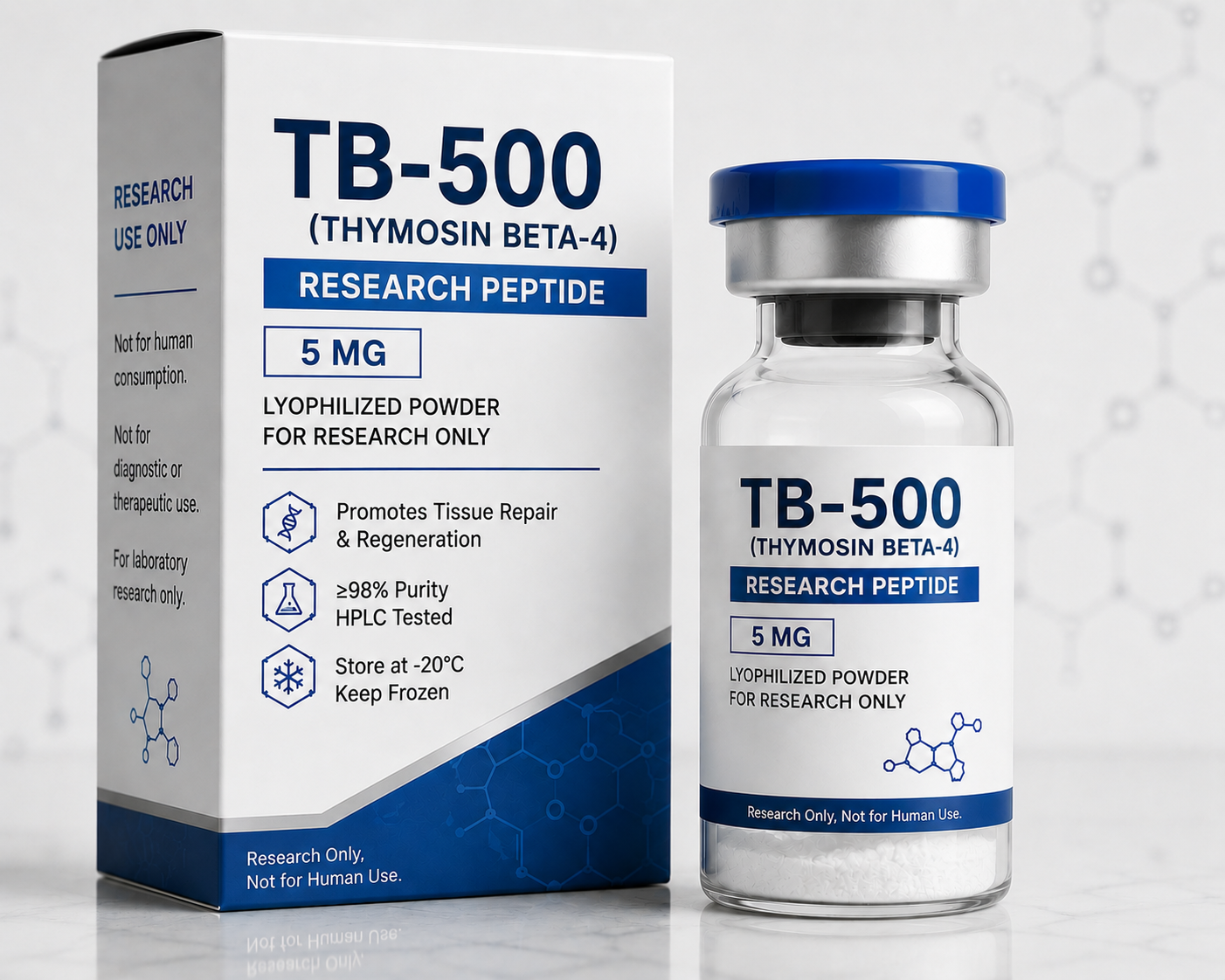
Quick Facts
TB-500 is a highly potent, synthetic derivative of the naturally occurring healing protein ThymosinBeta-4. It acts as a systemic master regulator of tissue regeneration, massively upregulating cellularmigration, angiogenesis, and actin remodeling. By unlocking the body's intrinsic ability to travel to andrebuild damaged cellular matrixes, TB-500 provides unprecedented recovery speed for catastrophicmuscle tears, cardiac injury, neurological trauma, and severe joint degradation.
What Is TB-500?
TB-500 (Thymosin Beta-4) is a synthetic derivative of the naturally occurring thymosin beta-4 protein, a primary regenerative peptide found in virtually all human cells. Renowned for its unparalleled ability to promote systemic healing and structural restoration, TB-500 is a cornerstone peptide in regenerative medicine. It works by regulating actin, a crucial protein involved in cellular movement and structure, thereby accelerating the repair of ligaments, tendons, muscles, and skin. Administered via injection, it facilitates cellular migration, tissue differentiation, and anti-inflammatory pathways, positioning it as a leading solution for rapid injury recovery, chronic tissue degradation, and systemic performance restoration.
The Biological Sentinel: What is Thymosin Beta-4?
Thymosin Beta-4 (TB-4) is perhaps the most ubiquitous and vital regenerative peptide in the human body. It is a 43-amino-acid protein that is present in almost all cells, playing a primary role in structural organization and cellular signaling. The synthetic version, TB-500, mimics the active domain of this protein.
Unlike highly localized regenerative compounds, TB-4 is a systemic "master regulator" of tissue repair. Its presence in every tissue, from the brain to the heart and the skin, is the biological mandate that allows the body to maintain structural integrity.
By supplementing with TB-500, one is essentially providing the body with an excess of its own natural "building and repair" signal, effectively shifting the body's internal priorities toward accelerated recovery and cellular maintenance.
Actin Sequestration: The Architecture of Recovery
The primary mechanism that differentiates TB-500 from other peptides is its role in actin sequestration. Actin is a fundamental protein that forms the scaffolding of cells; it determines cell shape, facilitates cell movement, and is critical for tissue contraction (in muscles) and organization (in connective tissues).
In many injury states, actin is "locked" in a state that prevents necessary migration and repair. TB-500 binds to actin, preventing it from polymerizing inappropriately while ensuring it is available when and where the body needs it for structural reconstruction.
This delicate regulation of actin polymerization is the engine behind TB-500’s efficacy. By controlling the scaffolding of the cell, it promotes cellular motility—the process where cells "crawl" into a damaged area to close a wound or rebuild a torn ligament. Without this regulated movement, healing is either impossible or extremely slow and disorganized.
Accelerated Wound Healing and Tissue Differentiation
TB-500 is fundamentally a tissue differentiation agent. It does not just urge cells to divide; it directs them to specialize.
In the event of a deep tissue injury, TB-500 promotes the recruitment of stem cells and progenitor cells to the site. Once they arrive, it facilitates their differentiation—guiding them to become the specific type of tissue required for repair, whether it be skin, ligament, tendon, or muscle.
This ability to not only recruit cells but to oversee their functional conversion is why TB-500 is so successful at closing wounds that have stalled in the repair phase, and why it is so effective at restoring the tensile strength of connective tissue after a severe injury.
Angiogenesis and Vascular Support
Injury recovery is physically limited by the capacity of the blood supply. You cannot rebuild tissue in a vacuum; you need oxygen, glucose, and specialized metabolic substrates brought to the injury site.
TB-500 is a significant promoter of angiogenesis—the creation of new blood vessels. By encouraging the development of microvascular networks at the injury site, TB-500 ensures that the "raw materials" for repair are delivered to where they are needed most.
This influx of blood flow is why athletes and patients using TB-500 frequently report that injuries—especially those to tendons and joints, which traditionally have very limited blood supply—experience a transformative reduction in downtime and a rapid increase in functional range of motion.
Systemic Anti-Inflammatory Modulation
Inflammation is the body’s first response to injury, but chronic inflammation is the primary inhibitor of recovery.
TB-500 modulates the inflammatory landscape by stabilizing the response of immune cells at the injury site. It prevents the hyper-inflammatory, "scarring-dominant" reaction that leads to inflexible, stiff tissue (fibrosis).
Instead, it encourages a "regeneration-dominant" reaction, where the body prioritizes organized, flexible tissue matrix.
This systemic anti-inflammatory effect is not just localized to injuries; users often report a reduction in systemic aches and pains and a general increase in joint fluidity, as the peptide works systemically to lower the body's overall inflammatory baseline.
Protecting Cardiac and Muscular Tissue
Because TB-4 is found in high concentrations in the heart and skeletal muscles, TB-500 has significant research interest regarding cardiac protection.
Following cardiac stress or injury, TB-500 facilitates the survival of heart muscle cells (myocytes) by activating survival pathways that prevent programmed cell death.
While this is a nascent field, the therapeutic implication is clear: TB-500 is a robust guardian of the heart's structural and metabolic integrity. For athletes or aging populations looking to protect their most vital muscular structures, TB-500 provides a layer of biological defense that few other peptides can offer.
Collagen Organization and Joint Health
The aesthetic and functional appeal of TB-500 is largely due to its effect on collagen. Collagen is the "glue" of the human body. As we age, our collagen becomes disorganized, causing joints to stiffen and skin to lose elasticity.
TB-500 encourages the collagen matrix to become more organized and functional. It promotes the replacement of disorganized, brittle collagen with structural, pliable collagen.
For joint health, this means improved shock absorption and smoother articulation. For the skin, it supports the healing of dermal lesions and improves the elasticity and resilience of the skin barrier.
Neuroprotection and Brain-Body Unity
Recent research has begun to investigate the role of TB-4 in neuroprotection. Preliminary studies suggest that systemic TB-500 may protect neurons against certain toxins and stressors.
By promoting the integrity of the blood-brain barrier and supporting the regenerative capacity of glial cells, TB-500 may play a key role in systemic recovery after brain-related fatigue.
While it is primarily marketed as a "recovery peptide," its reach into neurological health confirms its identity as a truly systemic regenerative molecule that protects and optimizes tissue across every organ system.
Who May Benefit
• Athletes, bodybuilders, or high-performance individuals recovering from ligament, tendon, or muscular injury.
• Individuals suffering from chronic joint pain, tendonitis, or connective tissue issues.
• Patients looking for systemic recovery support following orthopedic surgery.
• Individuals seeking improvements in overall skin elasticity and tissue healing capacity.
• Those wanting a non-hormonal, regenerative boost to protect the structural integrity of their muscles and joints during high-intensity training.
TB-500 Research Studies
Published clinical and preclinical research on TB-500 .
TB-500 Actin Sequestration
TB-500 specifically binds to cellular actin. Clinical studies demonstrate that this interaction upregulates the motility of healing cells by up to 600%. It effectively fluidizes the cellular scaffolding, allowing fibroblasts and myoblasts to rapidly travel vast distances into the wound site to begin repair.
TB-500 Cardiac Tissue Regeneration
In breakthrough cardiovascular models, TB-500 was proven to activate dormant epicardial stem cells, forcing them to migrate into dead, oxygen-starved heart tissue following a heart attack. It successfully prevented cardiac fibrosis and stimulated the growth of new, beating cardiomyocytes.
TB-500 Anti-Fibrotic Wound Healing
NEJM
Dermatological and surgical research confirms that TB-500 significantly accelerates the closure of massive tissue defects while strictly downregulating the pathways that lead to keloid and rigid scar tissue formation, ensuring that healed tissue remains elastic and fully functional.
TB- 500 vs Other Peptides
How does TB-500 compare to other leading research peptides?
| Feature | Semaglutide | Tirzepatide | Liraglutide |
|---|---|---|---|
| Weekly Injection | Yes | Yes | Daily |
| Appetite Control | Excellent | Excellent | Moderate |
| Average Weight Loss | 15-17% | 20%+ | 6-8% |
| Dosing Frequency | Weekly | Weekly | Daily |
| Blood Sugar Support | Yes | Yes | Yes |
| Long-Term Data | Extensive | Growing | Established |
| Convenience | High | High | Moderate |
Tirzepatide vs Semaglutide
- Tirzepatide may produce greater weight loss due to its dual-agonist mechanism (GIP + GLP-1).
- Semaglutide currently has longer-term weight management data available.
- Both medications require physician supervision and dose titration.
Tirzepatide vs Liraglutide
- Tirzepatide requires only weekly injections, whereas Liraglutide requires daily administration.
- Tirzepatide produces vastly superior weight reduction (20%+ compared to Liraglutide's 6-8%).
Testing & Monitoring
Before starting TB-500, healthcare providers may evaluate:
Medical History
MH- Extensive review of current musculoskeletal trauma, exact locations of pain, and history of orthopedic interventions.
- Review of any cardiovascular history, particularly prior myocardial infarctions or ischemic events.
- Assessment of active autoimmune conditions or chronic systemic inflammation.
Laboratory Testing
LT- Systemic Inflammatory markers (hs-CRP, ESR) to objectively track the resolution of chronic, localized, or whole-body inflammation.
- Advanced imaging (MRI, Ultrasound) is frequently used to establish a baseline of the muscle tear, lesion, or structural degradation before beginning the protocol.
Monitoring During Treatment
MDT- Frequent tracking of physical pain scales, improvements in flexibility, reduction in localized muscle spasms, and ability to handle mechanical loads.
- Adjusting physical therapy protocols to safely match the accelerated rate of tissue repair, ensuring the new tissue matures correctly under load without re-injury.
- Following an acute injury cycle (e.g., 4-6 weeks), transitioning the patient to a lower maintenance dose (e.g., 1-2mg monthly) for sustained anti-inflammatory protection.
Frequently Asked Questions
Everything you need to know about peptide testing, certification, and compliance.
Thymosin Beta-4 is the full, massive naturally occurring 43-amino acid protein. TB-500 is a synthetic
version of the specific active "fraction" (the part of the protein that actually does the healing work).
TB-500 is much smaller, highly stable, easier to synthesize, and specifically optimized to promote
cellular migration and wound healing.
No. One of the massive benefits of TB-500 is its incredibly low molecular weight, which allows it to
travel easily through the bloodstream. A standard subcutaneous injection in the abdomen will circulate
systemically and aggressively target any inflamed or damaged tissue in the entire body. However, some
practitioners still prefer injecting near the site for acute trauma.
Unlike BPC-157, which has a very short half-life and requires daily administration, TB-500 remains
active in the system for much longer. Its biological effects on cell migration and inflammation persist for
days, meaning a "loading phase" of two injections per week is generally highly effective for rapid
healing.
This is the famous pairing of TB-500 and BPC-157. They are universally stacked together because
BPC-157 builds the blood vessels and directs collagen, while TB-500 controls cell movement and
prevents scar tissue. Together, they cover every possible biological angle of tissue reconstruction.
Yes. If you are using the injectable form, once the lyophilized powder is reconstituted with bacteriostatic
water, the vial must be kept in the refrigerator (2°C - 8°C) to maintain stability and prevent the rapid
degradation of the peptide sequence.
Certified Vendor Requirements
To qualify as a PeptideValidation.com Certified Vendor, companies must meet our rigorous multi-step testing and documentation standards. Certification is not bought — it is earned through independent verification.
🏆 Apply for CertificationTo qualify, vendors must:
-
Submit Batch Testing
Vendors must submit product samples for independent third-party lab testing before listing.
-
Pass Purity Requirements
All products must meet minimum purity thresholds verified by HPLC analysis.
-
Verify Identity via LC-MS
Molecular identity of each compound confirmed through liquid chromatography-mass spectrometry.
-
Maintain Full Documentation
COAs, batch records, and testing documentation must be publicly available on the vendor profile.
-
Undergo Quarterly Re-Testing
Certification requires mandatory re-testing every quarter to maintain active certified status.
Looking for Certified Peptide Sources?
Access our directory of independently reviewed and tested vendors who meet our rigorous testing and validation standards.
PeptideValidation.com is an independent testing and certification platform. We do not sell peptides or receive commission from vendors.
Access Certified Vendor DirectoryRelated Peptides
Tirzepatide
GLP-1 + GIP dual receptor agonist. FDA approved for type 2 diabetes and obesity management.
Learn More → 🧬GLP-1 AgonistSemaglutide
Gold standard GLP-1 receptor agonist. Marketed as Ozempic and Wegovy globally.
Learn More → ⚡Amylin AnalogueCagrilintide
Long-acting amylin analogue in Phase 3 trials as a combination therapy with semaglutide.
Learn More → 🔥Dual AgonistSurvodutide
GLP-1 + Glucagon dual agonist by Boehringer Ingelheim currently in Phase 3 clinical trials.
Learn More → 🏋️Dual AgonistMazdutide
GLP-1 + Glucagon dual agonist showing strong metabolic and weight loss outcomes in trials.
Learn More → 🩺Healing PeptideBPC-157
Body Protection Compound. Researched for tissue repair, gut healing, and accelerated recovery.
Learn More → 💪Recovery PeptideTB-500
Thymosin Beta-4 fragment. Researched for muscle recovery, flexibility, and anti-inflammatory effects.
Learn More →