

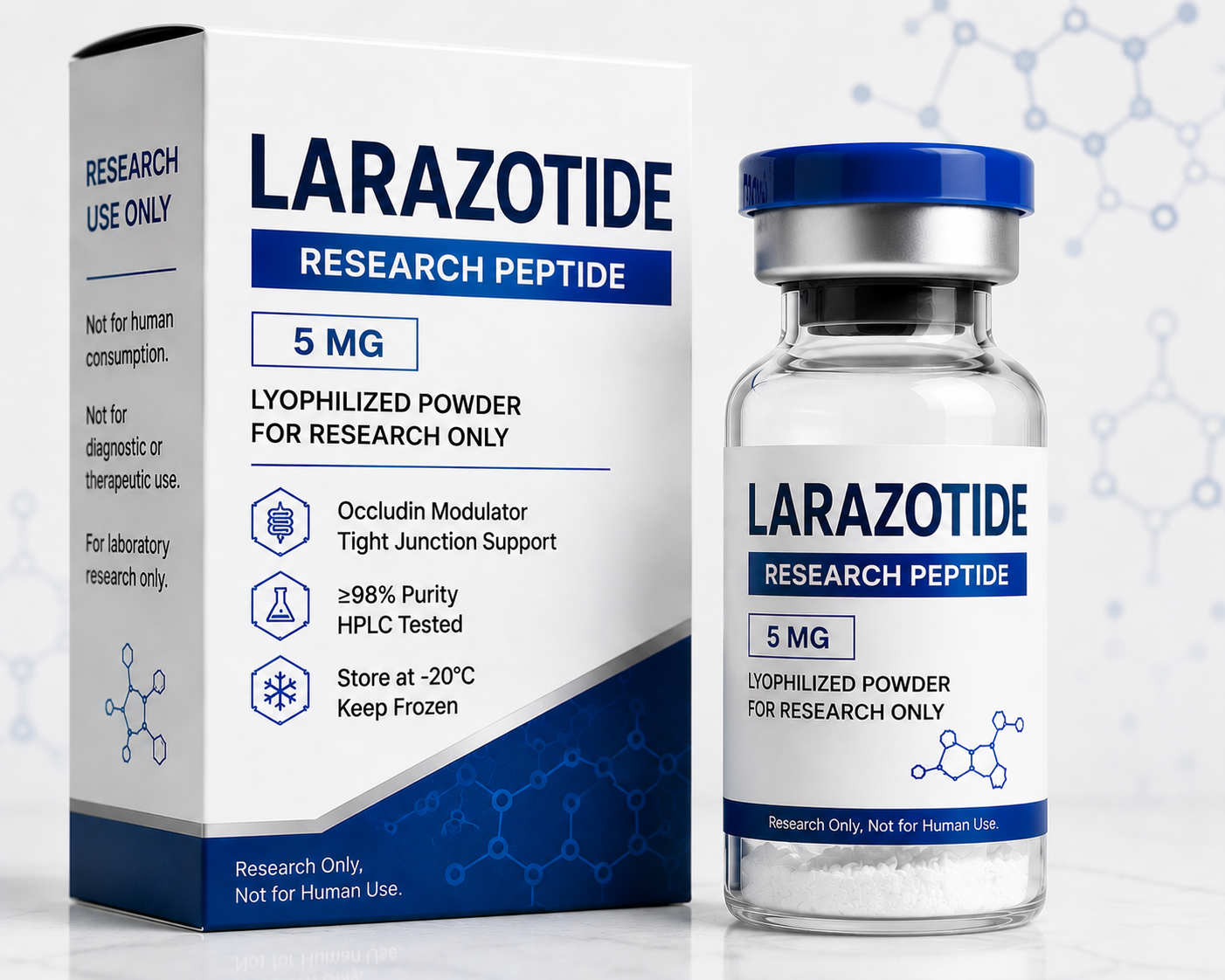
Quick Facts
Larazotide (AT-1001) is a groundbreaking, first-in-class tight junction regulator designed to haltgastrointestinal permeability ("leaky gut") and mitigate systemic inflammation. By functioning as aspecialized zonulin receptor antagonist, it structurally secures the intestinal epithelial barrier. Thisprevents the translocation of toxins, antigens, and undigested proteins into the bloodstream, making it acritical intervention for autoimmune conditions, celiac disease, and profound metabolic repair.
What Is Retatrutide?
Retatrutide (LY3437943) is an investigational peptide that belongs to a class of compounds known as triple receptor agonists. It is designed to activate three key metabolic hormone receptors simultaneously: GLP-1 (glucagon-like peptide-1), GIP (glucose-dependent insulinotropic polypeptide), and glucagon receptors.Retatrutide is being studied in metabolic and obesity-related research because of its unique multi-receptor mechanism of action. Unlike traditional single-pathway compounds, Retatrutide targets multiple metabolic signaling pathways that researchers believe may influence appetite regulation, energy expenditure, glucose metabolism, and body weight.Developed by Eli Lilly and Company, Retatrutide has become one of the most widely discussed investigational peptides in metabolic research and is currently being evaluated in ongoing clinical studies. Retatrutide is a novel triple agonist peptide targeting the GLP-1, GIP, and glucagon receptors simultaneously.
Retatrutide (LY3437943) is a novel investigational peptide developed by Eli Lilly and Company. It is classified as a triple agonist, meaning it simultaneously activates three distinct hormone receptors: GLP-1 (glucagon-like peptide-1), GIP (glucose-dependent insulinotropic polypeptide), and glucagon receptors. This triple-receptor engagement sets Retatrutide apart from every other metabolic research peptide currently in development or on the market.
As of 2023, Retatrutide has demonstrated unprecedented weight loss outcomes in Phase 2 clinical trials, with participants achieving a mean body weight reduction of up to 24.2% over 48 weeks — making it the most effective weight loss compound ever tested in a randomized controlled trial at the time of publication.
How Does Retatrutide Work?
Retatrutide works by binding to and activating three key metabolic hormone receptors in the body. Each receptor plays a distinct role in energy metabolism, appetite regulation, and glucose homeostasis. By engaging all three simultaneously, Retatrutide creates a synergistic effect that exceeds what any single or dual agonist can achieve.
Why Was Retatrutide Developed?
Retatrutide was developed to address the limitations of first and second generation metabolic peptides. While semaglutide (GLP-1 only) and tirzepatide (GLP-1 + GIP) demonstrated significant efficacy, researchers hypothesized that adding glucagon receptor activity could further enhance energy expenditure through thermogenesis and hepatic fat reduction.
What Receptors Does It Target?
- GLP-1 Receptor — Controls insulin secretion, slows gastric emptying, and signals satiety to the brain
- GIP Receptor — Enhances insulin sensitivity, augments GLP-1 effects, and modulates lipid metabolism
- Glucagon Receptor — Increases energy expenditure via thermogenesis and reduces hepatic fat accumulation
How Is Retatrutide Different From Other Peptides?
- Only peptide in development targeting GLP-1, GIP AND glucagon simultaneously
- Highest weight loss outcomes ever recorded in a randomized controlled trial (24.2%)
- Significant reduction in liver fat — addressing NAFLD and metabolic liver disease
- Improvements in cardiometabolic markers including blood pressure and lipid profiles
- Once-weekly subcutaneous injection with a favorable tolerability profile
GLP-1 Receptor
Stimulates glucose-dependent insulin secretion, suppresses glucagon release, slows gastric emptying, and activates satiety pathways in the hypothalamus to reduce food intake.
GIP Receptor
Enhances glucose-stimulated insulin secretion, improves insulin sensitivity in peripheral tissues, augments GLP-1 activity, and modulates lipid metabolism and adipose tissue function.
Glucagon Receptor
Increases hepatic glucose production, stimulates thermogenesis and energy expenditure, promotes lipolysis, and directly reduces liver fat — a key differentiator from GLP-1/GIP dual agonists.
The simultaneous activation of all three receptors creates a synergistic metabolic effect that exceeds single-receptor targeting alone.
Larazotide Research Studies
Published clinical and preclinical research on Larazotide.
Larazotide Phase 3 Celiac Disease Trials
Extensive clinical trials evaluating Larazotide acetate for celiac disease have demonstrated its ability to significantly reduce gluten-induced gastrointestinal symptoms and halt the breakdown of tight junctions when administered prior to meals, earning it FDA Fast Track designation.
Larazotide Reduction of Systemic Endotoxemia
Clinical studies measuring the translocation of bacterial LPS across the gut lining show that zonulin antagonism mechanically prevents endotoxins from entering the bloodstream, dramatically lowering systemic inflammatory markers like Interleukin-6 and CRP.
Larazotide Non-Systemic Safety Profile
Because the octapeptide is specifically engineered to act only on the apical (luminal) surface of the enterocytes and is highly resistant to rapid degradation, it passes through the digestive tract without entering the systemic bloodstream, yielding an incredibly safe side-effect profile comparable to placebo.
🔑 Key Finding: 24.2% weight loss at highest dose.
Retatrutide vs Other Peptides
How does Retatrutide compare to other leading research peptides?
| Feature | Semaglutide | Tirzepatide | Liraglutide |
|---|---|---|---|
| Weekly Injection | Yes | Yes | Daily |
| Appetite Control | Excellent | Excellent | Moderate |
| Average Weight Loss | 15-17% | 20%+ | 6-8% |
| Dosing Frequency | Weekly | Weekly | Daily |
| Blood Sugar Support | Yes | Yes | Yes |
| Long-Term Data | Extensive | Growing | Established |
| Convenience | High | High | Moderate |
Tirzepatide vs Semaglutide
- Tirzepatide may produce greater weight loss due to its dual-agonist mechanism (GIP + GLP-1).
- Semaglutide currently has longer-term weight management data available.
- Both medications require physician supervision and dose titration.
Tirzepatide vs Liraglutide
- Tirzepatide requires only weekly injections, whereas Liraglutide requires daily administration.
- Tirzepatide produces vastly superior weight reduction (20%+ compared to Liraglutide's 6-8%).
PeptideValidation Testing & Validation
Every product undergoes rigorous multi-layer laboratory validation.
Medical History
MH- History of diagnosed celiac disease, gluten sensitivity, or autoimmune pathologies.
- Review of ongoing gastrointestinal symptoms (bloating, erratic motility, pain).
- Assessment of secondary systemic symptoms like chronic fatigue, brain fog, and joint pain.
Laboratory Testing
LT- Zonulin and Intestinal Permeability Panels (e.g., Lactulose/Mannitol recovery test).
- Comprehensive Stool Analysis to rule out active parasitic or bacterial infections.
- Systemic Inflammatory markers: C-Reactive Protein (CRP) and Erythrocyte Sedimentation Rate (ESR).
- Celiac Serology (tTG-IgA, EMA-IgA) if active exposure is suspected.
Monitoring During Treatment
MDT- Reduction in frequency and severity of GI distress following meals.
- Improvement in subjective cognitive function and reduction of brain fog.
- Follow-up permeability testing to confirm the mechanical restoration of the barrier.
- Monitoring the titering down of circulating autoantibodies over months of therapy.
Frequently Asked Questions
Everything you need to know about peptide testing, certification, and compliance.
Larazotide acts rapidly to close tight junctions, often within hours of ingestion. Patients commonly report
a reduction in acute post-meal bloating and gastrointestinal discomfort within the first few days of use.
However, systemic improvements (like reduced autoimmunity and brain fog) require weeks to months of
sustained therapy as the body clears existing circulating inflammation.
No. Larazotide is not a "cure" for celiac disease, nor is it intended to allow patients to eat large amounts
of gluten safely. It is designed to act as an adjunctive safety net, preventing the severe immune
response triggered by unavoidable cross-contamination or trace amounts of gluten that slip into a
standard gluten-free diet.
Yes, and it is highly recommended. The combination of orally administered Larazotide (to lock the tight
junctions) and oral BPC-157 (to actively heal the damaged intestinal lining) is considered one of the
most effective pharmacological protocols for comprehensive gut barrier restoration.
While its primary clinical trials focused heavily on celiac disease, functional medicine practitioners
widely utilize Larazotide for any patient suffering from confirmed intestinal permeability, severe systemic
endotoxemia, or autoimmune conditions linked to a compromised gut barrier.
Because Larazotide is designed to block the permeability cascade before it starts, it is typically taken
orally 15 to 30 minutes before meals. This allows the peptide time to coat the intestinal lining and bind
to the zonulin receptors prior to the arrival of potentially inflammatory food antigens.
Certified Vendor Requirements
To qualify as a PeptideValidation.com Certified Vendor, companies must meet our rigorous multi-step testing and documentation standards. Certification is not bought — it is earned through independent verification.
🏆 Apply for CertificationTo qualify, vendors must:
-
Submit Batch Testing
Vendors must submit product samples for independent third-party lab testing before listing.
-
Pass Purity Requirements
All products must meet minimum purity thresholds verified by HPLC analysis.
-
Verify Identity via LC-MS
Molecular identity of each compound confirmed through liquid chromatography-mass spectrometry.
-
Maintain Full Documentation
COAs, batch records, and testing documentation must be publicly available on the vendor profile.
-
Undergo Quarterly Re-Testing
Certification requires mandatory re-testing every quarter to maintain active certified status.
Looking for Certified Peptide Sources?
Access our directory of independently reviewed and tested vendors who meet our rigorous testing and validation standards.
PeptideValidation.com is an independent testing and certification platform. We do not sell peptides or receive commission from vendors.
Access Certified Vendor DirectoryRelated Peptides
Tirzepatide
GLP-1 + GIP dual receptor agonist. FDA approved for type 2 diabetes and obesity management.
Learn More → 🧬GLP-1 AgonistSemaglutide
Gold standard GLP-1 receptor agonist. Marketed as Ozempic and Wegovy globally.
Learn More → ⚡Amylin AnalogueCagrilintide
Long-acting amylin analogue in Phase 3 trials as a combination therapy with semaglutide.
Learn More → 🔥Dual AgonistSurvodutide
GLP-1 + Glucagon dual agonist by Boehringer Ingelheim currently in Phase 3 clinical trials.
Learn More → 🏋️Dual AgonistMazdutide
GLP-1 + Glucagon dual agonist showing strong metabolic and weight loss outcomes in trials.
Learn More → 🩺Healing PeptideBPC-157
Body Protection Compound. Researched for tissue repair, gut healing, and accelerated recovery.
Learn More → 💪Recovery PeptideTB-500
Thymosin Beta-4 fragment. Researched for muscle recovery, flexibility, and anti-inflammatory effects.
Learn More →